
Construction projects generate several kinds of leftover material, and a single mixed skip can make later recovery harder. A practical construction waste segregation plan in the UAE begins before work starts: identify likely streams, provide suitable storage, confirm the collection route for the project’s jurisdiction, and keep the team using the system consistently. This guide is an operational checklist, not legal advice; requirements differ by emirate, municipality and project.
Start with the project’s local requirements
First confirm which authority and site rules apply. Dubai Municipality publishes building and planning circulars with construction-site housekeeping and waste-sorting guidance, alongside technical guidance for construction and demolition waste collection, transport and recycling. Dubai’s Law No. 18 of 2024 regulates waste management in Dubai. Abu Dhabi has separate municipal guidance, including the Abu Dhabi City Municipality construction-sites housekeeping circular. These sources are jurisdiction-specific; do not assume a Dubai process automatically applies in Abu Dhabi or another emirate.
Ask the project manager or environmental lead to identify applicable permits, approved service providers, waste documentation and client requirements before skips are ordered. Check the latest authority guidance directly, because rules and project conditions can change.
Map the waste streams before mobilization
Walk the work sequence and list what the project is likely to produce. Typical construction and demolition streams may include clean concrete or masonry, metal, untreated timber, packaging such as cardboard, and mixed residual waste. Site operations can also produce separate streams that need specialist handling. Do not put oils, chemicals, batteries, electrical items, contaminated material or other potentially hazardous waste into ordinary construction skips; identify them and confirm the correct handling route with a competent project specialist and relevant authority.
Use the project’s material schedule and demolition scope to estimate quantities and collection frequency. This is more useful than placing bins by habit: a small fit-out, demolition package and new building shell can have very different waste profiles.
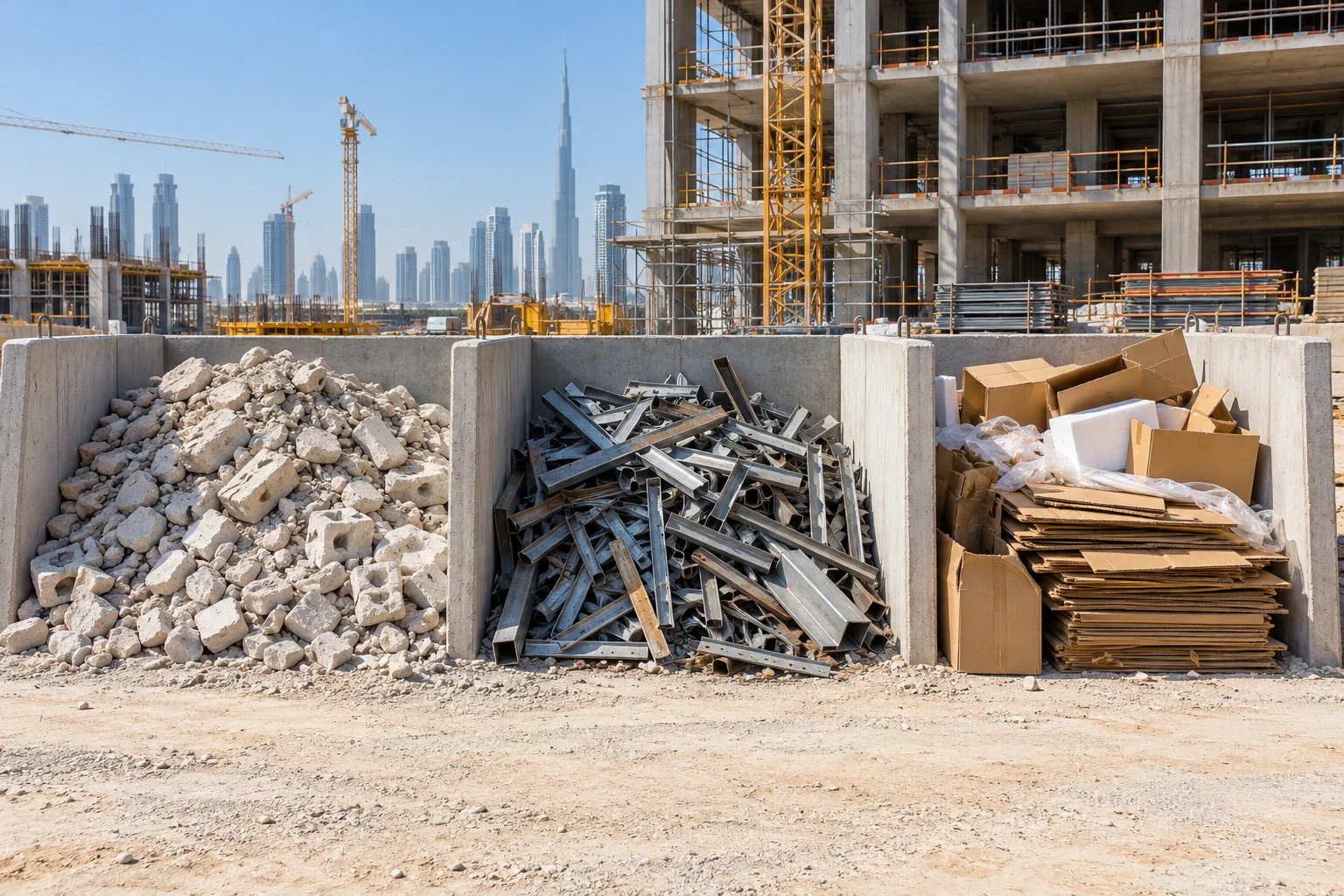
Set up a simple, visible segregation area
- Provide separate, clearly labelled containers for streams the project can realistically keep apart.
- Use words and simple pictograms, and explain the system during induction and toolbox talks.
- Place containers where crews can reach them without blocking access, emergency routes or work areas.
- Keep skips stable, in good condition and protected from windblown litter or contamination where needed.
- Post a short contact and escalation route for full, damaged or incorrectly used containers.
Make the layout easy to follow. If a skip is inconvenient or overflows before collection, the system will drift toward mixed disposal. Adjust container location or collection frequency rather than relying only on reminders.
Verify collection, transport and destination
Before pickup, confirm who is responsible, what stream is collected, and where it is going. Use service providers and facilities accepted for that project and jurisdiction. Ask what transfer notes, receipts, weighbridge records or other evidence the project should retain, and who is responsible for keeping it. Never treat a collection ticket as proof of recycling unless receiving-facility or contractor documentation supports that claim.
Keep records in a consistent project file: date, stream, approximate or recorded quantity, collector, destination and supporting document. The project lead can reconcile collections, investigate rejected loads and report accurately to the client. Follow local retention and reporting requirements rather than applying one assumed period everywhere.

Review performance and correct the system
Assign one person to inspect the waste area during routine site checks. Look for contamination, overflow, damaged labels, unsafe access and materials that do not match the container. Record recurring problems and fix their cause: update the induction, move the container, clarify the label, or coordinate a more suitable collection frequency.
At package close-out, compare the original plan with collection records and note what should change on the next phase or project. Avoid claiming a diversion rate unless quantities and destination evidence support the calculation.
Construction waste segregation checklist
- Confirm emirate, authority, client rules and site-specific waste requirements.
- List expected material streams and identify specialist or potentially hazardous waste.
- Agree container types, positions, labels, access and collection responsibilities.
- Verify collector and receiving route for each stream before dispatch.
- Keep collection evidence and inspect regularly for contamination or overflow.
- Review records at close-out and report only what the evidence substantiates.
Sabah Al Mustaqbal supports building construction projects in the UAE. For a project-specific discussion about site planning and construction support, contact the team.
Plan segregation before the first skip arrives
A clear, practical setup makes it easier for crews to sort materials and for project teams to verify where loads go. Confirm local requirements, provide containers that match the work, and retain evidence through collection and close-out.
Construction waste segregation FAQs
Do construction waste rules apply uniformly across the UAE?
No. Requirements and approved collection arrangements can vary by emirate, municipality, project and waste type. Confirm current rules with the authority and project team responsible for your site.
Which construction materials should a site separate?
Start with streams the project can collect and route reliably, such as clean inert material, metals and packaging. The project waste plan and local guidance should determine the final list, including specialist streams.
Can a mixed construction-waste load be reported as recycled?
Only when reliable treatment and destination evidence supports that claim. Retain collection and receiving documentation, and do not infer recycling from a collection ticket alone.
What information should a site waste record contain?
Record the date, material stream, quantity where available, collector, destination and supporting documents. Confirm any additional reporting and retention requirements for the project and jurisdiction.
Official references: Dubai Municipality Building and Planning Circulars; Dubai Municipality Waste Department Technical Guidelines; Dubai Law No. 18 of 2024 Regulating Waste Management; Abu Dhabi City Municipality Circular No. 001/2019 on Construction Sites Housekeeping.
